
For businesses trying to grow online, getting website traffic is only part of the challenge. The real goal is to attract people who are genuinely interested in your products or services and are likely to become customers.
This is where Google Ads can make a significant difference.
Unlike many traditional advertising methods, Google Ads allows businesses to reach potential customers when they are actively searching for a product, service, or solution. When campaigns are strategically planned and properly optimized, Google Ads can help businesses generate high-quality leads, improve conversions, and make better use of their advertising budget.
However, simply running advertisements on Google does not guarantee quality leads. Success depends on targeting the right keywords, understanding customer intent, creating relevant advertisements, using effective landing pages, and continuously measuring campaign performance.
In this guide, we’ll explain how Google Ads generate high-quality leads, what makes a lead valuable, and how businesses can create campaigns that focus on conversions rather than simply generating clicks.
What Are Google Ads?
Google Ads is Google’s online advertising platform that allows businesses to promote their products and services across Google’s advertising network.
One of the most popular formats is Google Search Ads. These advertisements can appear when users search for keywords related to a business’s products or services.
For example, imagine someone needs a digital marketing agency. They might search for:
- Digital marketing agency
- Google Ads agency
- PPC agency near me
- Lead generation services
- Digital marketing services for small businesses
A business running a relevant Google Ads campaign may appear when the potential customer performs that search.
This is powerful because the user is already demonstrating search intent. Instead of interrupting someone who may not be interested, businesses can reach people who are actively looking for a solution.
Businesses can also combine paid advertising with professional SEO services to build both immediate visibility and long-term organic traffic.
What Makes a Lead High Quality?
Not every lead has the same value.
A person who clicks an advertisement out of curiosity is different from someone who fills out a contact form because they are ready to purchase a service.
A high-quality lead generally has characteristics such as:
- Genuine interest in the product or service
- A relevant need or problem
- Appropriate budget
- Strong purchase intent
- A good fit for the business
- A realistic chance of becoming a customer
For example, a marketing agency might receive 100 leads from an advertising campaign. If only five of those leads are genuinely interested and able to become customers, the campaign may not be performing as well as another campaign that produces 30 highly relevant leads.
This is why businesses should focus on lead quality rather than lead quantity.
How Google Ads Generate High-Quality Leads
There are several factors that allow Google Ads to attract potential customers with stronger intent.
1. Google Ads Targets People With Search Intent
One of the biggest advantages of Google Ads is the ability to reach users based on what they are actively searching for.
Consider the difference between these two people:
Person A: Sees a random advertisement while browsing social media.
Person B: Searches Google for “SEO services for small business.”
Person B has already identified a problem and is actively looking for a solution.
That doesn’t guarantee that Person B will become a customer, but the search provides valuable information about their intent.
Businesses can use relevant search terms to position their advertisements in front of people at the right stage of the buying journey.
2. Keyword Targeting Helps Reach the Right Audience
Keywords are one of the foundations of Google Search campaigns.
Instead of showing advertisements to everyone, businesses can target search queries that are relevant to their products or services.
For example, a business selling accounting services may target keywords such as:
- Accounting services for small businesses
- Business accountant near me
- Professional accounting services
- Small business tax services
However, keyword selection should go beyond search volume.
A keyword with thousands of searches isn’t necessarily valuable if the people searching for it aren’t potential customers.
The goal is to identify keywords that combine relevance, commercial intent, and realistic business value.
Negative keywords can also help prevent advertisements from appearing for irrelevant searches.
3. Match Ads With Customer Intent
A successful Google Ads campaign doesn’t simply target keywords. It matches the advertisement’s message with what the user is looking for.
Imagine someone searches:
“PPC management services”
An advertisement that says:
“Professional PPC Management Services – Get More Qualified Leads”
is likely to be more relevant than a generic advertisement that simply says:
“Grow Your Business Online.”
The first message directly addresses the user’s search.
Relevant ad copy can improve the connection between the user’s search, the advertisement, and the landing page.
4. Use Dedicated Landing Pages
Where you send users after they click your advertisement can have a major impact on lead quality and conversion rates.
One common mistake businesses make is sending every advertisement to their homepage.
Instead, consider creating dedicated landing pages that match specific campaigns.
For example:
Google Ads:
“Google Ads Management Services”
Landing Page:
A page specifically explaining your Google Ads services, benefits, process, and CTA.
This creates a more relevant journey:
Search → Advertisement → Relevant Landing Page → Contact/Enquiry → Lead
A good landing page should clearly communicate:
- What you offer
- Who the service is for
- Why customers should choose you
- What makes your offer different
- What action the visitor should take next
The easier it is for a potential customer to understand your offer, the easier it becomes for them to take action.
5. Focus on Conversion Tracking
One of the most important elements of successful Google Ads management is conversion tracking.
Clicks alone don’t tell you whether your advertising is generating business results.
A conversion could be:
- A completed contact form
- A phone call
- A purchase
- A booking
- A newsletter signup
- A request for a quotation
- Another valuable action on your website
Google recommends using conversion tracking to measure actions that matter to your business, such as sales and leads. Learn more about Google Ads conversion tracking through Google’s official documentation.
Once conversion tracking is properly configured, businesses can identify which campaigns, advertisements, keywords, and other elements are contributing to valuable actions.
6. Optimize for Leads Instead of Clicks
A common mistake is to judge a Google Ads campaign based only on the number of clicks it receives.
Imagine two campaigns:
Campaign A
- 1,000 clicks
- 20 leads
- 2 customers
Campaign B
- 400 clicks
- 50 leads
- 10 customers
Campaign B may be significantly more valuable despite receiving fewer clicks.
This is why businesses should track metrics that connect advertising activity with actual business outcomes.
Important metrics can include:
- Conversions
- Conversion rate
- Cost per lead
- Cost per acquisition
- Conversion value
- Return on ad spend
- Qualified lead rate
- Revenue generated
The right metrics depend on your business model and objectives.
7. Use Location Targeting
For businesses serving specific geographic areas, location targeting can help improve lead quality.
For example, a business operating in Dubai may not want to spend its advertising budget reaching people who are located outside its service area.
Google Ads allows businesses to structure campaigns around relevant geographic markets.
A local service company could target specific cities, regions, or service areas depending on its objectives.
This can reduce wasted advertising spend and increase the likelihood that clicks come from people the business can actually serve.
8. Choose the Right Campaign Strategy
Different businesses have different customers, buying cycles, and objectives.
An eCommerce business may focus on purchases, while a B2B company may focus on enquiry forms and qualified sales opportunities.
A local service business may care more about phone calls and appointment requests.
Your campaign structure should reflect your business goal.
For example:
Lead Generation Campaign
Search → Landing Page → Contact Form → Sales Follow-Up
E-commerce Campaign
Search/Ad → Product Page → Cart → Purchase
Local Service Campaign
Search → Service Page → Phone Call → Appointment
The more closely your campaign structure matches your customer’s journey, the easier it becomes to optimize for meaningful outcomes.
How Landing Pages Improve Lead Quality
Getting someone to click an advertisement is only the beginning.
Your landing page needs to convince the visitor that your business can solve their problem.
A strong landing page should have:
Clear Headline
The headline should immediately communicate what the visitor will find on the page.
Relevant Information
The content should match the advertisement and search query.
Strong Call to Action
Tell visitors what to do next, such as:
- Request a Quote
- Book a Consultation
- Call Now
- Get Started
- Contact Our Team
Trust Signals
Testimonials, reviews, certifications, case studies, guarantees, and other legitimate trust signals can help reduce uncertainty.
Simple Forms
Don’t ask for unnecessary information. A complicated form can discourage potential customers from completing it.
Why Professional Google Ads Management Matters
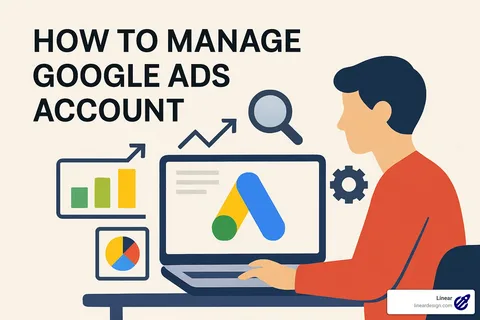
Google Ads can be powerful, but poorly managed campaigns can waste money.
Common mistakes include:
- Targeting irrelevant keywords
- Using broad targeting without proper controls
- Ignoring negative keywords
- Sending traffic to irrelevant pages
- Not tracking conversions
- Focusing only on clicks
- Failing to test advertisements
- Leaving campaigns unchanged for long periods
- Ignoring poor-performing search terms
- Not analyzing lead quality
Professional campaign management involves continuous research, testing, analysis, and optimization.
Brands Barks provides paid advertising services designed around high-intent traffic, conversions, and measurable campaign outcomes. Effective paid advertising involves keyword and audience targeting, campaign optimization, conversion tracking, testing, and performance analysis.
Google Ads and Lead Generation: A Powerful Combination
Google Ads and lead generation work particularly well together when campaigns are designed around the entire customer journey.
Advertising attracts potential customers, but the process shouldn’t stop at the click.
A complete lead-generation system can look like this:
1. Keyword Research
Identify high-intent search terms.
2. Google Ads Campaign
Show relevant advertisements to potential customers.
3. Landing Page
Provide information that matches the user’s search intent.
4. Conversion
Encourage the visitor to complete a form, call, book, or purchase.
5. Lead Qualification
Determine whether the lead is a good fit.
6. Follow-Up
Respond quickly and guide the prospect toward the next step.
7. Measurement
Track which campaigns and keywords generate valuable customers.
A well-planned campaign can work alongside professional lead generation services to attract, qualify, and nurture potential customers.
How to Improve the Quality of Google Ads Leads
If you’re already running Google Ads but aren’t getting the quality of leads you want, consider these strategies.
Review Your Search Terms
Look at the actual searches that triggered your advertisements. Identify irrelevant searches and add appropriate negative keywords.
Improve Your Ad Copy
Make your advertisements specific to the audience and clearly communicate the value of your offer.
Improve Your Landing Pages
Make sure the landing page matches the keyword and advertisement.
Qualify Leads Earlier
If your business receives too many irrelevant enquiries, consider adding qualifying questions to your form.
Track Offline Results
A lead isn’t necessarily a customer. If possible, connect your advertising data with your sales process so you can understand which campaigns generate actual customers.
Test Regularly
Test different:
- Headlines
- Descriptions
- Calls to action
- Landing pages
- Keywords
- Offers
- Campaign structures
Small improvements can make a meaningful difference over time.
What Is a Good Cost Per Lead?
There is no universal “good” cost per lead.
A lead costing $20 may be expensive for one business and extremely valuable for another.
Consider this example.
If a company spends $1,000 on advertising and generates 50 leads, its average cost per lead is $20.
But suppose only one of those leads becomes a customer worth $100. The economics may not work.
Now imagine another company spends $2,000 and generates 40 leads, but 10 become customers worth $500 each.
The second campaign may be much more profitable despite having a higher cost per lead.
That’s why businesses should evaluate lead quality, customer acquisition cost, and revenue, not just the number of leads generated.
Google Ads and Other Digital Marketing Channels
Google Ads can provide immediate visibility, but businesses don’t have to rely on a single marketing channel.
For example, businesses can combine search advertising with social media marketing to reach potential customers at different stages of the buying journey.
SEO can help build organic visibility, while content marketing can educate potential customers and support the overall customer journey.
This integrated approach allows businesses to use different channels for different purposes.
Google Ads and SEO: Working Together
Google Ads and SEO are often treated as competing strategies, but they can complement each other.
Paid advertising can provide immediate visibility for targeted searches, while SEO focuses on building organic visibility over time.
For businesses with long-term growth objectives, combining paid and organic strategies can create a stronger search presence.
For example:
Google Ads: Generate targeted traffic now.
SEO: Build sustainable organic visibility.
Content Marketing: Educate potential customers.
Lead Generation: Convert visitors into prospects.
Sales Follow-Up: Turn prospects into customers.
A broader digital marketing strategy can bring these channels together and help businesses create a more consistent path from visibility to conversion.
Common Google Ads Mistakes That Reduce Lead Quality
Targeting Too Broadly
Trying to reach everyone can result in irrelevant clicks.
Ignoring Search Intent
A keyword may have high traffic but low commercial value.
Poor Ad-to-Landing-Page Relevance
If the advertisement promises something the landing page doesn’t clearly deliver, visitors may leave.
No Conversion Tracking
Without conversion data, it’s difficult to know which parts of the campaign are producing business results.
Slow Follow-Up
Even a high-quality lead can become less valuable if the business takes too long to respond.
Measuring Vanity Metrics
Impressions and clicks can be useful, but they aren’t the same as revenue.
Frequently Asked Questions
How does Google Ads generate high-quality leads?
Google Ads can generate high-quality leads by targeting relevant searches, matching advertisements to user intent, directing users to relevant landing pages, and measuring conversions. Proper campaign optimization helps businesses focus their budget on searches and audiences that are more likely to become customers.
Are Google Ads leads better than social media leads?
Not necessarily. Lead quality depends on the business, audience, campaign strategy, offer, and customer journey. Google Ads can be particularly effective when people are actively searching for a product or service.
How much should I spend on Google Ads?
There is no universal advertising budget. Your budget should depend on your industry, competition, customer value, conversion rate, and business goals. Start with a sustainable budget and use campaign data to determine where additional investment makes sense.
How quickly can Google Ads generate leads?
Google Ads can begin generating traffic and potential leads relatively quickly once campaigns are approved and running. However, achieving consistently high-quality leads usually requires ongoing testing, optimization, and conversion tracking.
How do I know if my Google Ads campaign is successful?
Look beyond clicks. Measure conversions, qualified leads, cost per lead, customer acquisition cost, conversion rate, and revenue. The most useful metrics depend on your specific business goals.
Can Google Ads work for small businesses?
Yes. Small businesses can use Google Ads to target relevant keywords, locations, and audiences. The key is to control targeting, monitor performance, track conversions, and focus spending on opportunities that generate meaningful business results.
Should I hire a Google Ads agency?
If you don’t have the time or expertise to research keywords, manage campaigns, analyze search terms, track conversions, and continuously optimize performance, working with an experienced agency can help. The right approach depends on your internal resources and goals.
Final Thoughts
Google Ads can be much more than a way to generate website traffic. When strategically planned, it can become a powerful lead-generation channel that connects businesses with people who are actively searching for their products or services.
The key to generating high-quality leads is not simply spending more money.
It is about spending your budget intelligently.
That means choosing the right keywords, understanding search intent, creating relevant advertisements, building effective landing pages, targeting the right locations and audiences, tracking meaningful conversions, and continuously optimizing campaign performance.
Most importantly, remember that a click is not the final goal.
The goal is to turn the right click into the right lead, and the right lead into a customer.
If your business wants to improve its Google Ads performance, a strategic approach can help reduce wasted spend, improve lead quality, and build a more predictable path from search to conversion.
Ready to Generate Better Leads With Google Ads?
Getting more clicks isn’t enough. Your advertising should help generate qualified leads and measurable business growth.
Brands Barks can help businesses develop data-driven paid advertising and lead-generation strategies based on their goals, target audience, and customer journey.
Whether you want to generate more enquiries, increase sales, improve your cost per lead, or build a scalable paid advertising strategy, the right campaign structure and ongoing optimization can make a significant difference.